
https://www.reggae-vibes.com/articles/interview/2021/01/interview-with-aston-barrett-jr/
Stephen Cooper
Not many people can claim to be the scion of reggae royalty quite like Aston Barrett, Jr. Aston’s father, bassist Aston “Family Man” Barrett, and his uncle, drummer Carlton “Carly” Barrett, played with Bob Marley on so many of reggae’s greatest tunes — as the backbone of The Wailers. Furthermore, Aston’s grandfather Joe Higgs is known as the “Father of Reggae” for his mentorship of the original Wailers and many other Jamaican vocal groups, in addition to his own standout career. Emerging from this famous bloodline, it’s unsurprising Aston is a versatile, extremely talented musician; he’s also the bandleader of The Wailers — having taken over the role from his famous father several years ago — an iconic band nominated for Best Reggae Album at the 2021 Grammy Awards for their new album, “One World.”
Aston, I want to begin first by thanking you for taking the time to do the interview. Second, I want to say “big up” for your Grammy nomination, together with The Wailers, for your new album, “One World”; that’s a huge thing so I want to [congratulate] you. Thank you, man. Appreciate it.
Now because of the pandemic I understand the awards show has been pushed back a few months – true? Yes, that’s what I heard.
Are you bummed out and does it make it bittersweet – the fact that [The Wailers] have been nominated [for a Grammy] during this weird time [when] you can’t properly celebrate the nomination like you normally would? Well, yeah, you know, it’s funny, whatever [the] Wailers represent, it always come with a price. There’s always something that is never normal. (Laughing)
Have you been to the Grammy award show before? Nah, I’ve never been to one.
I ask because I know that you – in doing some research to interview you – I learned you had actually gotten a Grammy “certificate” I guess they call it, for co-producing a song with Damian Marley, “The Struggle Discontinues.” And you know that album, of course, was a Grammy-winning album for Best Reggae Album; I believe in 2017. Can you describe a bit the work you did co-producing that excellent song on Damian Marley’s album? What was involved in co-producing that? So originally, [Damian] called me when I was on tour, and he said he’d like to fly me out to L.A. because there’s just this one song where “he wants a Wailers’s vibe” to it. And I said, “Sure, no problem.” So I flew to L.A. for three days. It was him and Stephen Marley there. And [they] played the demo for me. So the original demo was mostly like a major key – you know the chord – [singing “The struggle continues then…”]. It was kinda like that the whole time, and then we did a version of it and the first version was good. Meanwhile, I was tuning the drums to do the next version the following day, [and Damian] came to me and said, “You know, I would like you to produce this song.” So when he said [that,] I said, “Sure, no problem.” So I took the CD into the hotel room, and I was [listening to it] in the hotel room the whole time. And then once I understand what the song was about — it says “the struggle discontinues,” but if you listen to the painting, it’s a struggle. So struggle — you don’t really hear any song that talks about struggle which is a major key, it’s a minor key. We wanted to “discontinue.” My father always [says you should] paint a picture when you play music. It’s like dissecting, you know? And that’s what we do with music. I dissected it, and listened to the words, and paint the picture on it. And there [were] no other musicians there, so I said, “What happened to the musicians?” And [Damian] said, “You’re the only musician.” So as you know, I’m into gear and I’m into equipment. And that studio had everything that I would want. So I recorded the drums through a Neve — a vintage Neve 1084 — but I didn’t use the EQ. Then I used the SSL J9000 EQ — so I didn’t use the pre-amp really on that. So it was a lot of experiments which was cool. We used a lot of microphones, did different [recording] techniques, and used all real instruments — [a] real grand piano, [and] a clavinet D6. And Stephen Marley brought his guitar, so I used his guitar to play the riddim.
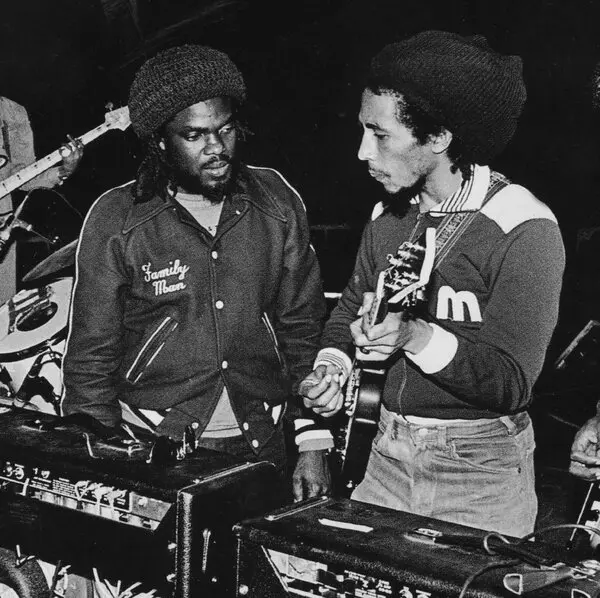
Now Aston, of course, one of the main reasons why I wanted to interview you – well there are many reasons. Because I do want to talk to you about your Grammy-nominated album for sure, “One World,” but before we get there I’d like to ask a few questions about your background and career so far — including, of course, your legendary, reggae-royalty family. And I think many people who watch or read this interview know that your father . How’s your dad doing?
He’s good. You know, he was with me earlier and just left the house like an hour ago. Because I drove up to my studio here where my daughter lives.
Respect. But he’s doing good.
Well good. I’m glad to hear it. When you see him of course give him all the love and respect [from me]. Just to say about your father that Aston “Family Man” Barrett is the legendary bass player who, along with his late brother, your uncle, legendary drummer Carlton “Carly” Barrett, were the backbone of the original Wailers who backed Bob Marley on all of his biggest albums. And furthermore, that your grandfather was the late legendary singer Joe Higgs. [Higgs] was an early mentor to Bob Marley and the rest of the Wailers and was a legendary artist in his own right. Then, also, your grandmother, your mother’s mom, was part of singing “Simmer Down” and “Chances Are” with Bob Marley — I think her name [is] Sylvia Richards. Yes, that’s correct. (Laughing)
I think she may have also had a hit song in ’76 called “Dearest.” Yes.
So the reggae historians should go back and check that out. So, [your family], these are just legendary figures in reggae music. Many people call Joe Higgs “the Father of Reggae.” And I want to ask first about Joe Higgs. Because he’s such an important figure in reggae history. I know that Joe Higgs passed away in 1999 after living in Los Angeles where I live for close to twenty years. Would you visit him in Los Angeles when you were younger? Yes, I visited him one time. I think it was around 1998. Yeah the whole family came up and one of our cousins, Nikiki Bogle, she’s a lawyer, and [when] she graduated from her law school we all came up there. And then we spent some time with grandpa, like a week. And it was great. We spent a week with Marcia Higgs, which is my mother’s sister, so we call her [aunt] “Pinky,” you know? (Laughing). And grandpa lived next door. So I used to go next door if I wake up early in the morning — and he was always up in the morning. He was always telling me stories. He even trained me a little bit — I didn’t know what he was really doing; you know he would go like [singing a vocal scale]. Different things. He would talk to me like I was an adult. He saw something in me, you know? There’s even a video — I have a family video where I almost made the whole family miss their flight, and he had to go back inside for me (laughing). I found that video the other day. So, yeah, when I was younger I spent more time with him.
And you must have been fairly young when he passed away? I was nine years old.
What [are] some of the things you remember your grandfather, the “Father of Reggae,” [Joe Higgs] [saying] – I mean these are pearls to the ears. You just mentioned how he would, when you were around him, he would work on different vocal chords, and you were a young man and were around him, and he was treating you like an adult. Which I find to be very interesting. Because I know from reading about him that he was a stern guy when he was dealing with The Wailers, any trio, or any vocal groups in Jamaica. Very.
I know that he was tough, but he had tough love to show them how to really sing. Do you remember any other things that stick out to you — and I know you were a young man but — is there anything else about your grandfather that you’d like to say? He was super-musical and he loved his family. When he sees his family, it’s like his heart. And his heart was big. And I remember the last time I saw him, when I was in L.A. during that same time, we got into the taxi, and I said “Alright, bye Grandpa!” And he said, “Alright, alright, bye.” And that was the last time seeing him. But I just remember when I was there he was always humming; he was always musical. And he just had a presence around him that I could just never forget. And he seemed like he was just a normal person when he was just walking around.
Humble? Yeah man, very humble. The thing about it is I didn’t really understand who he really was until he passed. And when he passed and I went to the memorial in Jamaica, [and] I saw all these people — even some old, old prime ministers from back in the day, so many people came to pay respect. I knew who he was, but I didn’t know the impact [he had], and how deep it was. And even though you don’t see my father in the video, my father was there. My father was the one who helped to organize that whole memorial.
Thank you for telling me about that. Sadly, and not just sadly, but tragically, your uncle Carlton was murdered in April 1987 in Kingston; that was before you were even born? Yes, because I was born in 1990.
I was reading my friend, you may have met him already, reggae historian Roger Steffens —
Alright, nice.
Of course I have his book on my shelf, one of the most seminal books about Bob Marley [called], “So Much Things To Say.” And I was reading somewhere else actually that your dad, In Roger Steffens’s book, many things are said about Family Man, and about Carly Barrett. But I was thinking about how you’re so into gear and, you know, all the electronics, and all this stuff. And of course it makes so much sense that you are because, for example, Roger Steffens’s [book] mentions that there’s a book by John Masouri – he’s another guy who writes about reggae — From England.
Yeah, that’s right. He wrote a book called “The Story of Bob Marley’s Wailers.” And in that book he reported that your dad built his first upright bass out of a couple of pieces of wood. And he used a curtain rod for the string. And [further Masouri wrote] that your uncle — he created his first drum set out of empty paint and kerosene cans. And I was so amazed when I read that. Because then, later, in [Roger Steffens’s] book there’s a quote from Bunny Wailer; he’s talking about one of your dad’s early albums [with Bob]. And he’s talking about the way it sounded, and why it sounded the way it did. This is what Bunny said: “Family Man was kind of a genius when it came to taking old electrical things that you would automatically throw away. Family Man would take all these little things, put them together and get a sound or get something from it that maybe you couldn’t buy in a store. [Even the new equipment couldn’t get the sound that Family Man was able to get out of the sound.]” He said “[Family Man] was toning the bass so that it would come out clean without having to mix that much”; “you don’t have to put it through,” he said, a “heap of equalization.” Exactly.
So I was just amazed [by] this. And the last thing [I want to] mention that Bunny Wailer said [as quoted in Roger Steffens’s book, “So Much Things to Say”]: “Carly Barrett was good at toning his drums ‘cause Carly was coming from playing pans and tin cans. So he worked to get the sound that suit the ear with that… kind of stuff.” And he said, “[Carly Barrett] was the first man I saw that when he hit [his drums], it was finished, the sound didn’t go nowhere.” The sound would die when he hit the drum. And [Bunny Wailer said, Carly] “was the first man I see put things in front of the drum and paste it down, like pad it so that when he hit [the drum] …the sound didn’t go nowhere. He was the first man who used to take off the front of the drum.” And when I read this, it meant so much to me because it was just like a year ago when I was hanging around, I was in the studio with another legend, he’s a good friend of mine named Scientist [also known as Hopeton Brown]. Nice!
Scientist is just — he’s a wizard. And I saw him — it was gonna be a session where Sly and Robbie came, so I got to see them playing live in the studio in L.A. [in 2019], and it was the first time I saw somebody take the front of the drum off. And put all this kind of padding. And Scientist was doing all this stuff to make sure that you could hear the drums [purely]. Like Bunny was describing [about what] Carly used to do with [his] drums. So I just brought all that up — I was talking for so long — It’s great. I love it.
I wanted to say it because it’s so amazing to me, and clearly you have so much of that in your blood, because when I hear you talk about the gear, immediately I think about this history from reggae, and think this is obviously the result of all that. Yes. Yeah man, my father was the one who guided me. You see, he’s like my Mr. Miyagi. Like grandpa was strict, my father was very strict too. I learned the music so I can teach it. But you don’t want to teach it to the wrong people because the next thing you know, you’ll have people in the band, they’ll come in and they learn it, and [the] next thing they might have a misunderstanding, and then they leave — and they leave with the sound.
Wow. I didn’t think about that. Yeah, those are the things why we kinda keep it a certain way. It’s like a secret, but it’s not really a secret, because it’s really in the blood and the feel. It’s in the bloodline.
In plenty of interviews you’ve talked about how it’s been very important for you to maintain The Wailers’s sound. So let me start there. This is a two-part question. First, with the Wailers’s sound: How do you describe, Aston, as the bandleader in 2021 for the Wailers — a historic band — how do you describe the Wailers’s sound in 2021? I would describe it as an evolution of the same feel. Because we have to keep moving forward, but the respect of it has to stay. Because you see, what it really is to describe it in a real formal [way]: There’s a frequency and a vibration scientifically proven which made [the] “Album of the Century,” [“Exodus”]. And that feel and that vibration is what we keep. So anything that we do, we keep that vibration. And it’s funny because I was saying this the other day, that after Bob passed the Wailers went kind of pop. Because Junior Marvin to me is one of the best guitar players — he has a great energy and a great vibe. I respect him very highly. But you know, Bob Marley was not a normal person. Bob Marley is just —
Mystical? Chosen. Mystical. Chosen. It’s like when Bob Marley talked, you want to listen. But if someone talked and say the same thing, it might not have the same impact on you. That is the same feel that we carry in the music and I was lucky enough to have that sound. How did I get it? The only thing I can say is: the Most High. I was chosen to do this work. I used to run away from it as I used to say, because The Wailers came with a lot of baggage. And, you know, because I have the ability to do my own thing. But to see that my father, and Carlton, and Bob made so much impact — and the Marley family, they are doing a fabulous job. They’re keeping their father’s legacy [going strong]. But for the Wailers’s legacy, where it comes to the musical part of it, that is the part where I wanted to make sure to [keep it] alive. Because they have to do what they have to do so they can stay relevant in their time, and to keep their father’s legacy [going]…..remember my father has a lot of children.
Yeah. Carlton Barrett also had kids. So the thing about it is… I didn’t really want to do it because it was to a point where, if I took over [The] Wailers, I don’t want to say everyone, but they would expect that I’m supposed to take care of them — all of them. Because my father [took] care of a lot of people, and when I took it over it’s just to take care of the music, so the music can fulfill the message to the people.
‘Cause it’s not for us alone. It’s for the people. So we can save lives. Because a guy came to me one time and said he almost committed suicide, and we saved him. So, you know, I have to give thanks definitely to my mother, Angela Barrett. And there’s this guy named Owen “Dreadie” Reid —
He was the one who guided me, and each time I said I was gonna give up, I can’t deal with this — even before my father got ill — I just didn’t want to deal with it because, you know, my father had some management that were just not really so smooth in certain things. They were smooth in other things, but not in my liking, so I started to work with Lauryn Hill. And I would usually tour with Julian Marley, too. But when [my dad] called me, he said, “Son, I don’t have any soldiers around. You’re the only one that I have.” So I said, “Alright, I won’t let you down.” I’ve been there ever since.
Respect for that. Now before I [move] on to the next question, since we talked about your uncle’s sound on the drums and, you know, I know that you’ve said before that from talking to your father, and learning from your father, and from watching videos of your uncle, and lots of different things, you were able to learn Carly’s drum sound. Can you explain — you know you just talked a little bit about what The Wailers’s sound is — what is, how would you describe the distinctive sound of Carly Barrett’s drums? It’s like, when you listen to Carly, you think of a plank. It’s just so solid. His one drop is so solid — and deep. It’s not basic, but it’s not treble. It has this frequency that — it’s like when — it’s very spiritual. It’s a godly music. When he play[ed] drums, it [was] like an angelic kind of feel. And the thing about it, when him roll — ‘cause if you listen to, I have some drum tracks with him, and if you listen to his roll — it’s like, you know, when the bass [is] nice and it’s in your chest?
Yup. (Imitating drum roll) When he rolls it’s the same way. It’s like “wow.” And it’s so fire, man; so Carlton’s style is a mixture of, I would say, jazz, samba, and African. Definitely the influence came from Cuba as well. And from jazz. And then when he joined [Lee] Scratch [Perry] you can start to hear more of the funk. Because they were definitely fans of James Brown and Jackson Five. But when I learned it, honestly, it’s my father. Because remember, there’s a saying [that] when you’re around someone, you become them. And you see my father, his music, and the way how he is, his personal — remember people’s personality is in their instrument. It’s like most guitarists, you notice most of the wickedest guitarists, they have an attitude? When they play, it’s like wow. It’s like Junior Marvin and Al Anderson, they’re like the nicest people, but when they get into their guitar mood sometime they —
I’ll tell you what guitarist I’m about to ask you about — Earl “Chinna” Smith.
Have you played with him at all? Yeah man. We did a tour in 2015, we brought a couple of the original members back, even Dennis Thompson, one of the great [sound] engineers, one of the originals too. He came back. So we did a tour with Dennis Thompson, Glen DaCosta from Zap-Pow and Wailers as well. And Tyrone Downie – that was the first time we brought Uncle Tyrone – he was the hardest [of the original] Wailers to get, oh my gosh we went through ups and downs trying to get him. But when we got him, it was amazing. And then we had Chinna. That was my first time working with Chinna, and I can [see] why my father really rate Chinna Smith very highly. Because Chinna understand every frequency when it comes to the Wailers. He knows everything – he fills in the right gap [in the music]; when he plays, it’s like “wow.”
But all you would have to do is listen to Bob’s albums – (Laughing) Yeah.
— [or] look at the liner notes because I know, as Chinna said, Bob Marley didn’t play the bass, and Bob Marley didn’t play the drums — No man. No man. My father and Carlton deserve the highest of highest [honors considering] they made the “Album of the Century.” And put Jamaica in another category on the map. Before the pandemic they were planning to give them an award. From what I remember, Esther Anderson — I don’t know if you know her — she made a few calls, cause a couple of people dem were making awards and stuff. And she was just like Chinna, “How can we forget!?” And they were working on everything, but the whole pandemic kinda changed everything. So just to let you know: If you’d have interviewed me before the [pandemic began], I would by saying the same thing — what Chinna said. (Laughing)
I wanted to ask you, because, you know, your dad as we’ve talked about, is such an iconic figure in reggae, and was the bandleader of The [Wailers] after Bob died. He was the leader of The Wailers for so long, only retiring in the last couple of years. And [he] turn[ed] over the awesome responsibility and the reigns of being the bandleader of The Wailers to you. And if you think about Family Man’s nickname, and why he nicknamed himself that, I think people will understand why I’m going to ask you the next question: What was the advice that your dad gave you, I guess it was in 2016 or so, when you became the bandleader [of] The Wailers? What was his main advice about the skills and the qualities that are critical for a bandleader, a “Family Man,” to possess, to be able to have a good touring band? Yeah, well you know, he told me how he used to be in the past; when he [first] took over the band [after Bob’s death] he wanted to keep the band as a unit. Because he got older you know, [and] the difference is everybody in the band is a star, but even though they respect him and know that he is the leader, you know, when they couldn’t get their own way, things just went kind of haywire. So a lot of them left the band. And then they came back again, you know? And they leave and come back, and leave and come back [again]. So after a while, my father got into a position where he [was] used to people leaving and coming back. So he was always cool and mellow, but he was [also] very strict. Like if someone had a complaint, [he] would give them like one chance, and if they complain again he would just replace them. And he always told me to try not to be that way. But he said he became that way due to experience. But he said to learn from those mistakes and try to keep [the] band [together]. He said never to judge someone. And never pick a side. So basically, if someone in the band has a misunderstanding, even though I might not agree with that one, I have to still find out and see why — what is the problem why that [band member] doesn’t agree.
This is so critical, Aston. Because you know a lot of reggae bands don’t stay together. You know Raging Fyah, when they were the original Raging Fyah with Kumar [Bent] as the lead singer, I mean [they] were one of my favorite bands. And I interviewed them [several times], and I actually interviewed them right before they broke up (laughing). So you know, just to say, bands break up. Was there anything else that you wanted to say about what your dad had said about running a band? He also told me to be careful of “LSD” —
“Lead Singer Disease?” Lead Singer Disease, yeah. [That’s] a disease that a lot of lead singers get; it [doesn’t] have to be a negative, it can also just mean that you have to remember when you’re singing for The Wailers, when you’re singing in Bob Marley’s shoes, you get a power. You get a power and then you forget who you really are sometimes. And then you start to say you are our leader, because you’re the lead singer. What we did — when we started touring again — we took out the word “lead” [before] singer.
Wow. Very interesting. That makes sense. Egos will get out of control if you don’t do things like that, right? Yeah, and then if you have to depend on… alright look at this: I believe in God. I believe in the All Mighty. But I say love is my religion just as Ziggy [Marley] says, because from my experience with the Rastafarian community they’re all great, but there’s different tribes. And the tribe that I’m used to being around is Twelve Tribes [of Israel]. But even though I’ve never attended, I have a lot of family [that] was in Twelve Tribes. And then my father had a lot of friends who [were] Bobo [dreads]. And I also had a lot of friends that [were] Binghi —
Nyabinghi, yeah. So the Rastas that I grew up with were very smooth and righteous, live good, treat women good, and you know? These are the things that I’m used to. But then nowadays when you see the way a lot of them [are], especially my father never forced things on me. And that was one of the reasons why I wanted to learn more about the Rastafarian community, because it was just so open. And they opened their arms and they never condemned you and tell you this because — you have religions out there — the Bible says that “Thou shalt not judge.” And a man say, “You’re gonna go to hell, you know?” And you’re already committing a sin, because “Thou shalt not judge.” (Laughing)
There have been so many different formations of who exactly is touring with The Wailers over the last few years.” And he was curious as the band leader, “How do you decide who goes on tour, who’s gonna be the lead singer, who’s gonna be the guitarist; how do you make decisions like that as the bandleader?
Well what we do, we try to create a team that is in the family. So either you’re [part of] the bloodline, or you’re a student, you know? If it is someone that is out far [from the bloodline], it is someone that is capable of learning. So you know we would bring in people and train them. The only thing I never did was train them and make them sign a contract. Because that is what I would have to do, because this music is very serious. And my father and my uncle’s sound is very serious. And I can’t just be going out there —
And taking anyone? Because you can teach it, you know, it’s very spiritual. So you have to be careful. When it comes to the musicianship, since I took over the band, we’ve basically had the majority of the same people. Which is great because we hardly [ever] have misunderstandings. And we keep the thing grounded. What was hard in the beginning was when I took over my father’s business, and we won the court case. It was very difficult because I won the court case with my father’s debts —
This was the court case about who gets to tour as “The Wailers?” Yeah because my father said he didn’t want to work with his management anymore. And the next thing you know, we went to court and the management is telling we that they are “The Wailers.” (Laughing) So the judge sees a whole bunch of guys in suits, and then he saw the Rastas on this side, and the judge is like, “Come on, guys.”
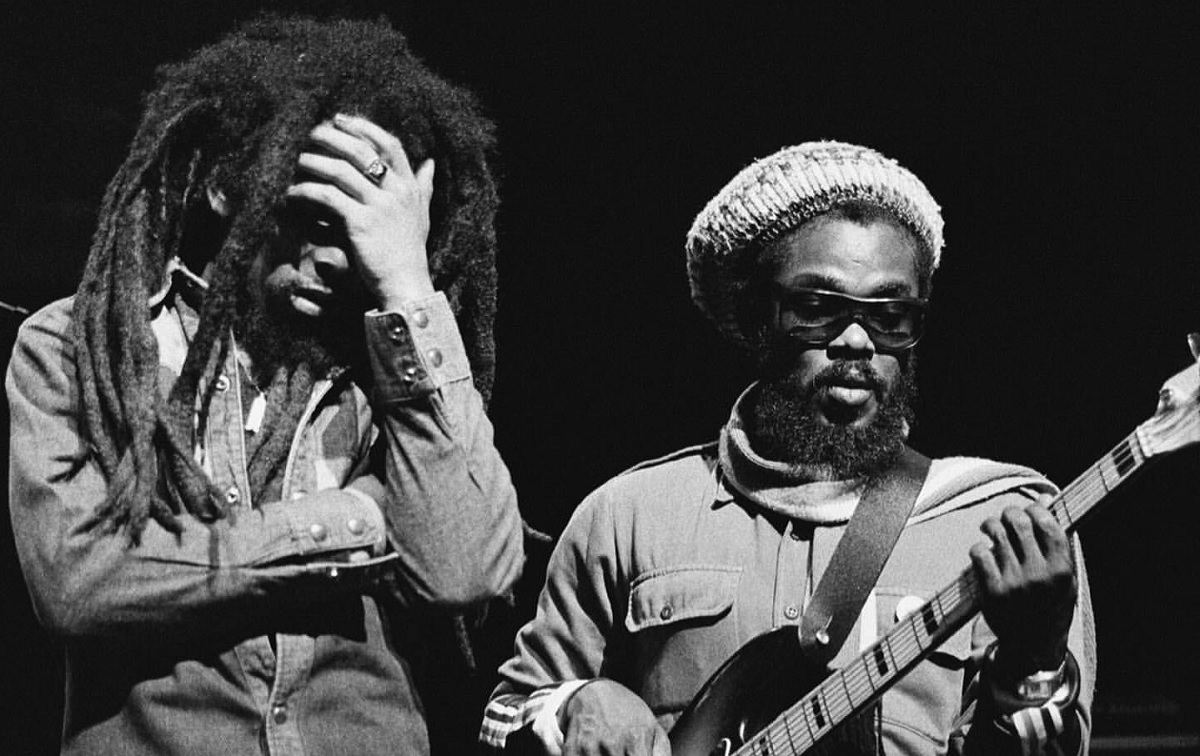
Aston the last thing I want to ask about your legendary family before I want to get into a little more about your career, and also turn to the “One World” album, is something that concerns me that [legendary guitarist Earl] Chinna [Smith] [and I] talked about in Kingston last year; it was something that came up during our interview. Because Chinna made clear in my interview with him that he’s not only angry with the Jamaican government, for what he perceives as their disrespect of The Wailers’s legacy, especially when it comes to your dad and your uncle, but actually he’s really upset [about the other original Wailers like] Tyrone Downie, Wire Lindo, and all those guys. But he also made clear that he’s upset with the Marley family, too, over what he believes to be their financial mistreatment of the original Wailers. And Chinna said to me, the Marleys “have the money, but where is Family Man’s money, and Carly’s money, and Tyrone’s money, and my bloodclot money too!?” And Chinna continued, “These people that are listening to reggae, they must go into the history of the music and find out how come The Wailers are so poor and everybody else rich.” Now I know that your dad once sued the Marleys and Island Records unsuccessfully, I think, over some unpaid royalties. And I know that that was some time ago.
Does your dad and your uncle Carly’s family, do they still feel financially wronged by the Marley family and the Marley estate? I wanna tell you — all of this was before my time. Because I was still in middle school — — so as you can see, we are doing a lot of things with the Marley family —
They’re [singing] on your album [“One World”] — Skip Marley, Cedella, Julian — We can’t sing “One Love” if we don’t live it. So we live “One Love,” that’s why we made a new song with a new generation called “One Prayer,” you know? “One World, One Prayer” [which is the first track on the album]. And [the Marleys] were a part of it. You know, because we’re family. Family always — families have disputes in their own family, too. It’s just different things, and misunderstandings in different ways. So when it comes to my father now, as you can see, remember I told you about my father’s management? So things could have probably been much smoother if — So there are a lot more personal details back in those times, but as you can see we are living as one now.
There seems to be a lot of unity between the Barretts and the Marleys. It never stopped. It never stopped. Even in those times [of disagreement] we were still around, hanging out, and we were still doing things [together].
Those were just business things? There’s a difference between business and family? Yeah because really and truly, the majority of it wasn’t even my father. It was the people him around. We understand, and everybody understands [that].
Your first professional gig, after you moved from Jamaica to the United States was playing bass for Julian Marley when you were in high school, true? I would say middle school.
Middle School. Yeah. Wow, because you were a teen, very young. Yeah man, because this [was] in 2005.
You were living in Florida then, too? Yes. I came up to America [from Jamaica] and I’ve been [living] in Florida ever since. Since September 11, 2001. Early in the morning before the [terrorist attacks] happened.
Now I mentioned that you played with Julian Marley. And earlier you mentioned how you had played with Lauryn Hill. And I had to stop you and just say, “Hey, hold on a second,” because, you know, Lauryn Hill is [so] wicked! How did you connect with Lauryn Hill? How did you first meet her? And how did you end up going out on tour with her as her bass player? Well there’s a guy named Lenny Dread who used to live where Mama Booker lived. And Bob brought him in and told him that he must stay there — with Mama Booker. So I used to see Lenny Dread all the time and he used to sing because he used to pick me up sometimes for Julian [Marley], or Damian [Marley], or Steve [Marley]. And I said, “Man, you have a wicked voice, you sound like a Marley; you have that kind of tone.” So I said: “I want to do an album for you.” And I did three songs — remember I [was] in high school, don’t know anything, [and] I said “Yo, I want to do music.” So anyways I [then] did three songs with a guy named Bagga, he used to be around too. And he told me that he got a call to go do some work with Lauryn. So he was telling Lauryn about me because he was driving with her, I would say “Ms. Hill.” And she said, “yeah,” because she’s also a huge fan of my father. And [so] she wanted to hear me. So I got the call for the audition. And the audition was very short because as soon as I went there an auditioned, they were like “Ok, show [is] tomorrow.” (Laughing)
Awesome. Wow. That’s amazing. Yeah it was great. And that’s when I realized the difference of touring in reggae bands, and the difference of touring on a professional [level]. At the time it was very different. Because Lauryn Hill is on the top level. So we tour in a [well-appointed] bus, everything is organized — we have our hotel room, a per diem, we have a “buyout” — and there’s really no miscommunication on those [things]. The only thing is we rehearsed a lot. And she’s very musical. And I learned a lot because the shows are never the same; she would have ideas for days. And just come with different ideas. It was very challenging. But it made me a much better musician. Because it showed me that I can go through any challenges. And I really respect her very highly because she is a one of a kind. Even when she is showing the background singers different melodies. It [was] like melodies I’d never really heard before. And how she’d create these different things. And how she wants to remix some of her music to make it more entertaining. So it was great. And when I came in, she wanted me to give her that Barrett sound into her music. Which to me was amazing, you know? So I had an amazing time with her. When I was touring with her, that’s when my father called me back, I think after the second year, he was doing the Rock the Bells [festival], [and] he called me and asked me if I could come back with him [and play in The Wailers]. That’s when I told [Lauryn Hill’s] people.
How did Lauryn Hill take it when you said [you] had to go back, and listen to my father, and take over The Wailers? Well it wasn’t “taking over The Wailers” then, it was just —
Well to come back and play with the band? To be the drummer first, right? No I was the organ player.
Organ player? Ok, wow. You’ve done it all for The Wailers. Yeah man, percussion and organ. And then I played bass. Yeah, you know, she was fine, she took it good because it’s my father, and he’s a legend — and she’s a fan too.
Now about four months ago, you were also interviewed on a show called “Reggae in Seattle.” And you said about this new Wailers’s album “One World”: “We will say that we don’t care about the Grammys, but we kinda do.” (Laughing) Naturally any musician, even for reggae, wants to win a Grammy. But I will say, I will never forget when Duckie Simpson of Black Uhuru was talking to me about the Grammys, and he laughingly told me that he gave his Grammy award to his son to play with. And his son knocked the funnel off of the award, and threw it down a balcony. And he was laughing about it. And I was thinking (laughing) — that’s your Grammy award! But Duckie Simpson, you know, he’s a different kind of guy. But for you and The Wailers this year, for you and your band, why would winning a Grammy Award be so meaningful? It would be meaningful because it would go directly to my father. Yeah that is why. I do it for myself as well, the hard work, but when it really comes to the hard work, my father is the man. To even reach to this level, he guided me through everything. Because remember, you know, they made an “Album of the Century” (Exodus), which is bigger than anything. Bigger than the Grammys, bigger than anything in the world. So to even get a Grammy now, I would say I would be representing all of them. Even [The Wailers] that are not [playing with the Wailers anymore] like Tyrone [Downie], Junior, Al, Chinna, Wire [Lindo]. I respect them all. Bunny, Peter, Junior Braithwaite —
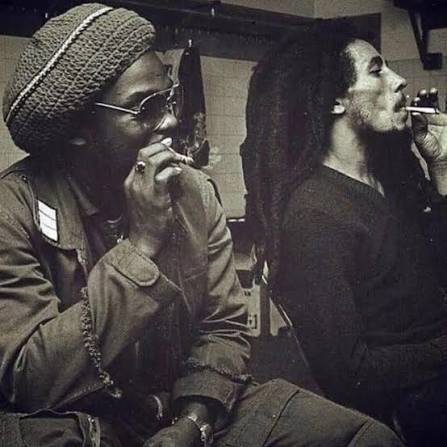
Beverley Kelso? Yeah man. I respect every one of them. Because we [wouldn’t be] winning the Grammy with any of their original old music. [Actually,] I wouldn’t say “old music,” because Wailers’s music has no category. So I would say that this music that went into it is actually new music that was guided to me from my father — to create this ability. And then to get such a great producer, Emilio Estefan —
I was about to ask you about him because you produced the album [“One World”] with Emilio Estefan, and I should have immediately made the connection — that he is the husband of [legendary singer] Gloria Estefan. And their daughter is [named] “Emily,” and I know she sings on the [“One World”] album too with you, correct? Yes.
And how did this connection between the Estefans and The Wailers happen? I mean, of course, “The Miami Sound Machine” is based in Florida — where you live — but how did you first meet Emilio [Estefan], and how did you start working [together]? [It’s] a funny story, man. So, we got an offer to do a show at the Miami District by the Estefan Kitchen. So we said, alright we’ll do it, because we looked at our schedule and we were already on tour. And I like to do shows in my hometown. So we got the call, and two days later, we got another call asking if Emily [Estefan] could be a guest [singer]. So at the time, we were wondering, who is Emily? So they said, “Emily Estefan,” and it kinda made sense. So we said, “Oh, it’s [Gloria and Emilio’s] daughter. So we said, “Alright, yeah, sure.” We had one day [of] rehearsal. And she rehearsed three songs with us. And she was so amazing, we were like “my gosh.” And we did the show, and she did the whole show — like she rehearsed the whole show with us.
Did you get to meet and hang out with Gloria Estefan — and what was that like? Yeah, yeah, she was there almost every week when we were there recording. Because Crescent Moon Studios where we did the mixing and the final [cut] for everything — so they have like five or six [recording] rooms; I’m not really, really sure how many; I’ve only been in three rooms. The room downstairs is the room with the API console, that’s the one where we shot everything. And then upstairs, [there’s] the J9000 SSL 4, that is where we did all the mixing. And then I called — honestly, when we started to record it sounded good, but the API console [wasn’t] giving me that push that I was used to from the Rupert Neve; so I called Rupert Neve and asked them for about six of their pre-amps.
[Rupert Neve] of course sponsors you — I don’t know if everyone knows that; so that’s why when you called them up you [could] get what you want from them? Yeah man, because you see, what Bunny [Wailer] said about my father (see Part 1 of this interview for more on that) — how he would just put
together and get a sound that you can’t really get if you go to the stores. That’s how Rupert Neve — Rupert Neve’s sound is close to [the sound] I remember that my father would create. So that’s why I really like them. I think the smartest thing they came up with was “the silk.” The silk is one of the best things — they have a tape emulator which is called a “542”; I have two of them here. And their EQs is like no other. But on the album “One World” we used the API console, which is also phenomenal. We used the EQs from the API, but we used the pre-amp from the Rupert Neve. And it has the silk.
I’m gonna have to drop all this on my friend [legendary sound engineer] Scientist later and see what he [says about all of this]. Because I know he’ll know about all of this equipment. Now I have to ask, one of the songs [on the “One World”] album, where you sing lead, [which I mentioned earlier], “Destiny,” it’s one of my favorite songs [on the album]; it has a very rootsy vibe. And I was really surprised when I read — I didn’t know that “Destiny” was actually a remake of a Gloria Estefan song. And if you listen to Gloria’s [version] of the song, and then you listen to The Wailer’s remake of it, it’s remarkable how you “reggaefied” that song. And as [you’ve said before], you “Wailerfied” it. How did you turn that song into a cool, rootsy, reggae vibe? Well you know, we’re painting a picture. To even tell you how it really started, that was the second song we worked on with Emilio — the first song was “One World, One Prayer.” And the second song was “Destiny.” So after we did the show with Emily [Estefan], we went upstairs [in the studio] and Emilio came to me and said, “Reggae [is] coming back on a different level.” This is when I just met him. And then he said to me, “I would love to help you guys.” So I said, “Alright.” Many people say they want to work with us, so I didn’t take it serious[ly]. And we got a call from his manager at the time — who just passed away, rest in peace — Frank. One of the best guys, man. And we got invited to the studio. And that’s when we saw everything and we spoke. Then two days later we got called to go to “Sonyland” with Emilio. And we went there and that’s when everything happened. The guys at Sonyland, all of them had a testimony about what Bob Marley and The Wailers music has done for them. So that’s when it really started. But then for “Destiny” now, we were working on some of the songs and [Emilio] was upstairs working on “The Voice” — you know that show called “The Voice?”
Yeah. So he was upstairs working with them, and we were downstairs because The Wailers album — this “One World” album — I started working on it at least three weeks with Emilio before the [rest of the] band came in. I did everything with him before the band came [to] make sure it was all organized. Other than the five other songs [that] me and Josh Barrett did. So he came downstairs, and he sat in the chair beside me, and he said, “You know I have a song named ‘Destiny’ that I want you to hear; I would like to do this [song] over in reggae; it’s a song that we did with Gloria and it was a hit.” So I said, “Yeah man.” So he said “I’m gonna play it for you.” He played it for me [and] the first thing I said [was]: “When was this recorded?” He said “It was recorded in about probably the 80s or 90s.” I said “Was that a tape machine?” Because man, it’s a while where you don’t really hear tape; but the frequency on a studio tape machine, man, it’s like even all these digital things still can’t give you the goose bumps [in that same way]. So that’s why we always try to get to the highest, so we use [equipment] like Burl, Prism, and Rupert Neve — because that is the closest we can get, you know? When I listened to it, I said “Play it again, please.” So Emilio said: “Alright. How long you need? You need two weeks?” [And] I said, “No, I could do it in a day.” He said “What!?” I said, “Yeah man, I can do it in a day.” Because the chords [on “Destiny”] kinda remind me of the [Bob Marley and The Wailers’s song] “Forever Loving Jah.” I think I have that kinda flavor. So I told [Emilio] I would come up to Bad Lion [Studios] [the next day]. So I drove up here, and as soon as I [arrived], I opened up my email [and] I saw the song, and then [also] the sheet — the song sheet, the lyric sheet. And I said “Wow, this is different.” This is [what happens] when you’re working with top – top professional people. Because normally people send you a song — you just get the song. Or sometimes they send you the MP3 [file], or the file is missing or something (laughing). So yeah, it was very, very organized. So I’m listening, listening to [the song]. And I read the words, read the words. And then, to “reggaefy” it, I did not know the song well enough, so in order to finish it, and to move fast, I had to sing it. So it was me alone in the studio — there was nobody there. So I’m [there] singing it and getting it right. So once I get everything right then I went back in the vocal room, and just — I don’t know [who we were going to have] sing it; maybe we’d have Stephen [Marley], Julian [Marley], Skip [Marley], or maybe Josh [Barrett]; we [weren’t] sure who we’d want to have sing it. Because I didn’t consider myself as a singer. So I’m there doing everything, and you know, I’m listening to Bob Marley and The Wailers. And Bob Marley[’s music] is [what] I grew up with, so that’s why I really, really know [it]. And so I’m doing everything, people don’t even know — you know you’ll have secrets about yourself that people don’t know about. You know like when you’re in the shower and you’re singing. People don’t know if you really can sing or not. And I remember somebody made a comment when I was around Damian Marley one time. And they were like, “Well, Fams, Fams can do everything but sing.” And when they said that, it kinda dinged me down. And I was like, “Well I’m not going to even try to sing,” because somebody [had] already made [this comment about by father]. And my mother looked at me and said, “What is wrong with you? You should not [let] little comments like that bring you down. You should sing!” So I said “Alright,” you know? So anyway, I [sang] and [then] I deleted the vocals and send it — the MP3 [file] with WAV. And Emilio said, “I love it!” So I told them I’m coming down to [their studio with] the hard drive. So I brought the backup drive instead, because you know, when you’re moving fast, [sometimes] you don’t know what [you’re doing]. So I brought the wrong hard drive. And so the backup drive had the vocals —
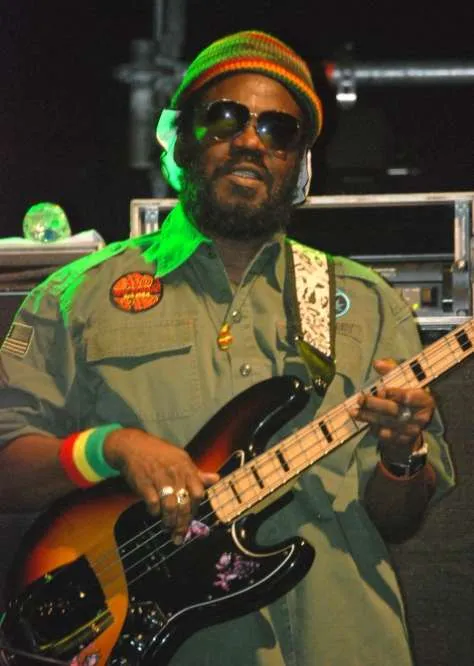
Wow. So [that’s] how [Emilio Estefan] heard you sing? Yeah so when I gave it to them, I left. And when I woke up in the morning I got a text from Emily [Estefan], “Oh my gosh, I love your voice!” I said, “What you mean?” She said, “You’re singing —” [And] I said, “Oh, crap. No, no, you [weren’t] supposed to hear that.” She’s like, “Yo, we’re keeping it.” I said, “No, man.”
It’s such a wicked song, man. So I hope that you, in the future, will sing more because I do think you have a great voice. And also do you have any personal projects yourself that folks should know about? Alright, so I just spoke to Emilio two days ago, I went to see him actually. We’re starting [a] new Wailers album.
Awesome. Another one? Yeah man. We’re starting a new one right away.
Do you have a name for it yet? No, no. Because we’re still writing. So, new music, I’m working with a guy called Jahgun; he’s from Brazil. Also a guy named Rafael [Cardoso Vale] from Brazil. [And] I’ve been mixing too — I’ve been mixing people’s albums too.
I read another interview that you did in Respect Mag where you said you might be doing some work with 80s pop star Cyndi Lauper. Is that accurate? Yes. That’s with Emilio [again] though.
Through Emilio, oh, okay. Yeah, through Emilio.
So maybe that collaboration could be on the next [Wailers] album? Yeah because we were trying to do that on this [“One World”] album.
I was trying to imagine, because you know, [Cyndi Lauper] sings “Girls Just Want to Have Fun,” and you know, all those pop songs from the 80s. And I was like, how could they do a reggae song [with] that? But then I was like, well, they managed to [remake a] Gloria Estefan [song], so if anyone is able to do it, The Wailers, they might be able to do Cyndi Lauper — a reggae version of “Girls Just Want to Have Fun”; I would want to see that. Yeah you know for this album we really hope to have a couple of the other guys who played with Bob [Marley] too. Because we had my father and Donald Kinsey who played with Bob [playing] on this [“One World”] album. [For this next album,] I would like to have at least Tyrone —
Tyrone Downie? Yeah. So it will be great. Because even before Uncle Wire [Lindo] passed away, we did three weeks [playing] with him before he passed away. When I took over the band, I tried to bring everybody [back from the original Wailers that were still alive] — at least nobody can say I never tried. They can’t say I never tried. Because when [I] took over — before [I] took over, we tried it with the “Original Wailers,” the one that Al [Anderson] has out there. And it couldn’t work because my father is originally Al’s boss; so working [with them], it couldn’t really work. And then we brought in Junior Marvin and Tyrone Downie, and that was magic. Tyrone is here — Tyrone is still there; he tours with us mostly in Europe. Uncle Junior is the best. But you know Uncle Junior is also his own kind of singer, and he has his own style, so he wanted to do his own thing as well. So he went and did his own thing —
Do you have any final message for all the reggae fans out there in the world who love The Wailers, [and] wish that we could see you on tour, [and] wish that we could see you perform, what message do you have for all The Wailers’s fans? We say peace, love, and unity. And have faith. We will be there. Even if we’re not there physically, we will be there spiritually and mentally. And we’re gonna keep this music moving forward forever and ever. So don’t worry. My father has done a fabulous job of guiding me. We have to give thanks to the Most High. And we have to give the highest respect to Bob Marley, Carlton Barrett, and Family Man.
Always. Aston, give thanks my brother, and we’ll be in touch again soon. It was fantastic talking to you, and best of luck at the Grammys. Yes family, bless up.