
https://unitedreggae.com/articles/n2446/031219/interview-big-youth-in-kingston
By Angus Taylor
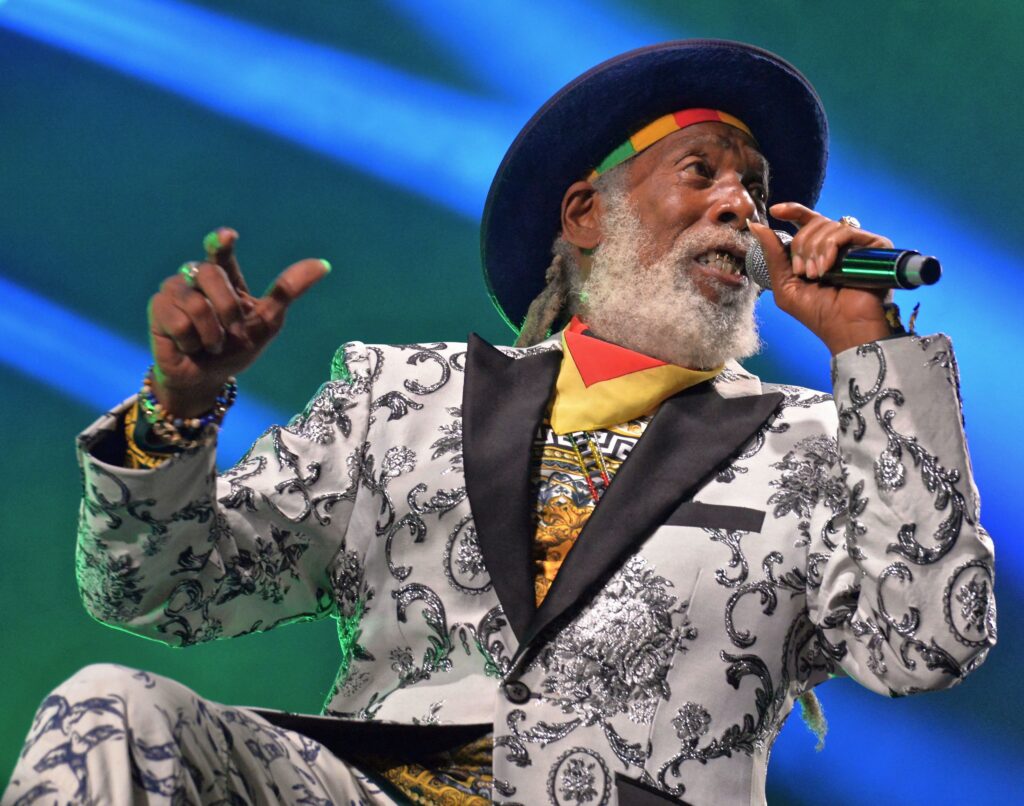
No one embodied the 1970s reggae scene in its pomp quite like Big Youth. The dreadlocked deejay’s music and persona contained the decade’s gritty DIY street toughness, its Rastafari social conscience and its flamboyant ghetto fabulousness all at once.
As the microphone speaker who popularised Rasta lyrics on Jamaican sound system, whose rough-edged mystical chants made him a favourite of Britain’s punk rockers, Big Youth‘s place in history is secure. But when you talk to Manley Augustus Buchanan, he still sounds like a man with something to prove.
And when you did that, did you get a fight from the powers that be?
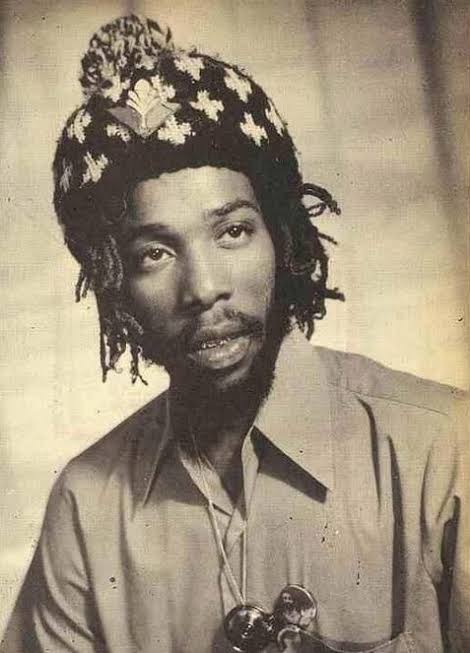
Brethren, brethren, brethren – in no time! In no time I had seven songs in the two charts. Because there were two radio stations here so it was me that controlled it you know? Every kind of thing. Because we were punching out some lyrics that were different. I used to push up my knots inside but I’d take off my cap and shake my head and the world would go mad!
It’s Big Youth that started the Natty Dread culture
Where did you first free up your locks?
Maybe in Carib Theatre? It was just natural and then I made the song Dread Inna Babylon because when we said “Dread Inna Babylon” it’s the wickedness of the times that we were facing even now today…. I was foreseeing and talking about. Which is a greater power than even Big Youth you know? It’s the Almighty’s inspiration because he put me as a watchman to watch the city. And tell the people. Because like I say it made the change that Big Youth is the whole Natty Dread culture. Everyday everybody rise up and everybody say “Ray ray ray”. It’s not no Marley. It’s Manley Buchanan Big Youth that start the Natty Dread culture. And all of them adapt. And maybe one of the main reasons why you can be talking to me today is because of the way that I have been stifled.
Really?
Of course. I’m not given my just reward. I’m not quarrelling or begging. I’m not complaining. I’m just telling you like it is. Because it’s me that raised the banner and said “Natty Dread” so the whole of them have to come see me. It’s me who told them about “automatic pistol remote control, synthetic genetics to mash your soul.” What kind of food are they feeding them with now? Genetics. Is that that I was talking about from ’73.
Your browser does not support the audio element.
But the people that know the real history, they know. But you say you never got your financial reward?
Yeah, who know. Thank you. One of these days. I’m still holding on.
In 1977 I carried Dennis Brown as my opening act
We just visited the former site of the African Museum label. Was that the first label that recorded you? The song Movie Man on the rhythm to Errol Dunkley’s Movie Star?
All right. That time Gregory was round in Milk Lane. He never had a shop and all of that. Because it’s me that turned African Museum and Gregory Isaacs and Dennis Brown into stars, man. Come on man. When I’d go to England in 1977 I carried Dennis Brown as my opening act.
With Lloyd Parks and We The People band.
You see they call him Crown Prince? And when I do all of that. It was politics because Joe Gibbs was there, they were trying to dethrone me to push up him. And through all of these things. All of this Gregory and Dennis we – we were like one. Making music. Because even that song that Gregory did with me first, it didn’t go nowhere. It wasn’t even playing on the radio. Because that is what I was making music for you know? To hear them on the radio. I wasn’t even thinking about no money or no star thing. I just wanted the message to get over to the people to be heard. So we had Dennis, Big Youth and like I said I took off. Because after I did S90 Skank and Chi Chi Run that’s how it would stay.
You did Chi Chi Run for Prince Buster – whose shop we just visited around the corner.
Yeah round the corner. Come on man. It’s right here all of these things. The same day we made S90 Skank [for Keith Hudson] was the same day I did Chi Chi Run. And another couple because Buster didn’t have a full album. He just had a couple of songs and hitched on because they were seeing how great I am even more than I knew. Before I knew, they could see. So they wanted to take advantage of the situation. So I worked with it, I worked with it and I got wise up.
We couldn’t find Jimmy Radway’s premises. He was one of the first to record you.
Jimmy never had a studio. He was just a one-foot man. Because the real talk of the thing is that Jimmy Radway is the man carried me to the studio first. And he was itching like he really wanted to do it – to do Black Cinderella. And Gregory Isaacs is a serious man you know? He’d come to the dance and hear me how I was handling the people. So Gregory said “This is the man.” He was the man that booked the first studio time at Dynamic Sound.
Your browser does not support the audio element.
We also just visited Randy’s where you did Natty No Jester…
No Jestering, Hit The Road Jack, Ten against One. Yeah and those Jimmy Radway tunes, some of them do up there too, you know? So most of my voicing, some of the wicked songs that I did, were upstairs. I can remember when we made the rhythm of Hit The Road Jack… if you ever listen to that rhythm you hear a bus drive downstairs because we were upstairs in Studio 17. Because the thing about Studio 17 was it’s not the studio, it was like the man that was running it – Errol Thompson.
The engineer.
That’s the greatest one. You hear them big up and boast up everything but if you listen to Joe Gibbs…
Errol went there as well.
That’s where. Because he left from Randy’s and went to Joe Gibbs. You listen to the way that he put things. We didn’t even have certain kind of digital fandangos but he could make things to get those kinds of sounds from back in the day.
He was very clever with sound effects.
Yeah, that he created.
For Joe Gibbs you did Foreman vs Frazier. Did you watch the fight?
I was working with them. Right around the country because Frazier brought a band called the Knockouts with the Beaufort Express and all that. So we were touring Jamaica with the fighters and the band. We did some shows.
At the time did you think Foreman was going to win?
It was Frazier. Joe Frazier. Because remember I came out and I did another version and I said “Because Joe Frazier was my boxer anyway but George Foreman has got him down.” Because remember I did Round Two. That was fun. We mingled with Foreman and Frazier and Kenny Norton. Me and Norton had a stink because there was a girl named Deborah Youngblood who was in the band the Beaufort Express. And I was after her and it was Kenny Norton’s girl! So that’s fun man.
Let’s talk a little bit about your work with Gussie Clarke and that Screaming Target album.
That was one of my worst nightmares. Wicked this trip. Look man, when Gussie’s mother died, Gussie was living one, two, three blocks across from here. Because this is Orange Street, Chancery Lane, King Street, Love Lane, four blocks, Church Street. And we knew Gussie and Gussie got rhythms. Gussie wasn’t a producer, he got some rhythms, KC White…
No No No…
That No No No and Anywhere But Nowhere. He got those things and me and Gussie were making the album together. So it’s my talent, I would get some rhythms and me I no get no advance, no nothing. He never even wrote a contract because we didn’t know what the hell that is back in the days. But through him go to Kingston College and Heidelberg University, they know what they’re doing.
The album came out. Screaming Target was a movie when we’d go to matinee on a Wednesday. I thought this movie Screaming Target was wicked and Clint Eastwood Dirty Harry. So that was the whole story and then I tried to tell the youth that they mustn’t be illiterate, must go to school and try to become civilised. So it’s teaching youth we were running you know? And that album comes out and even today they say it is the greatest deejay album.
Yeah, people loved it.
Yeah to the world. In the world circle and everything. Gussie was just unfair. And it’s just lately that we ound out about publishing to a level and we try but they take away all of it. But one day me and him are going to go to the court. Even though they know I no love the courthouse but man no dead so we go carry them to court because they have my wealth.
So then you decided “I’m going to start my own Negusa Nagast label… and do my own thing?”
Because we put seven songs in the two charts and if you saw my house down the street? It was nowhere for a human being to live. You understand? And with all that I created and having all of these guys driving nice vehicles now? Come on! So I just made a song named World Is A Ghetto and I just turn around and call it Streets in Africa. When I did that they said I can’t sing you know? Bad fight us within the business. And to be honest with all of this fame and things I create, that’s the only time I saw a change that I could move out of this dilapidated building. And people were even vexed because they still wanted me to stay there to uplift them. While they want to carry you down. Cho!
Then I realised now and I say “Alright I’m not going to sing a song for no producer. When it comes to singing vocal I sing for Negusa Nagast – Big Youth.” And the thing went on and on until we get a rhythm from Phil Pratt and do Every Nigger is a Star. Because I was in the movie. There is a movie named Every Nigger is a Star. It’s not no racial bullshit.
Boris Gardiner did the soundtrack and you were in the movie.
And they don’t want to give me no justice. Boris Gardiner will go on like it was him alone. We’d sit up at the same Sheraton and wrote that with him and Calvin Lockhart. But he still wants to take the claim for Every Nigger is a Star like it was them that wrote it. It was we. And Every Nigger is a Star [the film] flopped. There is a journalist down here named Archie Lindo. He doesn’t say nothing good about Rasta. But when he criticised the movie he said one thing about the movie “Every time Big Youth appeared on the screen he got a standing ovation”.
It was me that formed the I Threes
So that is why now when I started taking the Sweat For You Baby rhythm and start singing this Every Nigger is a Star and find the changes in the break and everything. And then I said “All right I’m going to get a horn section to cover it”. Come on! I even did What’s Going On to the same rhythm. With the horns now. You understand me? And it was a hit. And when I did that song it was me that formed the group named the I Threes.
Really?
How you mean really? Every Nigger is a Star – that song that formed the group. ’75 and it ran away. That’s why Bob Marley would come. I remember one of them was his wife. That’s why they had to put them together. It’s me they used to take on and they did all of these songs. I’m in the reggae phenomenon. It’s them singing Lord Jah Bless. It’s the I Threes, it’s me and them.
So how did it happen?
Because the shining light is on me. Me the phenomenon. Phenomenon means indescribable. So me was the man that all of them admired. And I was too nice because I let in everybody and treat them good when I should be treating myself.
How did you get signed to Virgin Records?
Boy that is a next thing. Because we were with Trojan. And then Johnny Rotten because they think that is me that mashed up the punk rock. They said Big Youth chase it. And Johnny Rotten acknowledged it because Johnny Rotten them is my friends. The Sex Pistols. When my era rise in London because the punk era was taking over with God Save The Queen and all of that. So Big Youth come chase all of that. It’s me that was the talk of Britain and all of those things man.
Johnny Rotten sat at my feet
The punks they really loved you.
Come on man! Johnny Rotten sat at my feet man. And said it before me himself. They did a documentary to acknowledge that you know? Right now I’m doing an album with Zak Starkey, that’s the drummer from The Who.
The son of Ringo.
That’s right. I was acknowledged from then. These people say they grew up on me.
I’m doing an album with Zak Starkey, the drummer from The Who
What do you think it was about what you did that the punks loved so much? They weren’t so into the singers like Dennis Brown and John Holt.
Because I’m wild man! Wild man and I take certain notes and go to a depth man. I must tell you I’m speaking with you but I acknowledge that Big Youth is something else. I don’t let it get to my head you know? Which sometimes I should! (laughs) So that’s me.
The thing is brethren, the system stifles Big Youth man. And pushes some other mediocrity man. And it goes on for long. And when they go on all tired and tired and then when they see this Big Youth it’s a young youth they see. Because I’m well-preserved. With righteousness. Because I’m not preaching idiot things. You hear me sir? Because I’m not no racist. Because I quarrel with black people too, you know? Because enough of them are racist. Because if him just want to be black what happens to the next man who you call white? He is a human being. I allow for everyone. So that is what we call righteousness and that exalts a nation.
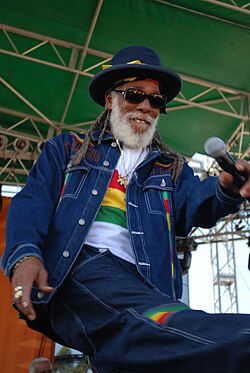 Can you tell me about your appearance in the film Rockers?
Rockers is just a natural movie. If you notice it’s just two little appearances I make in it. And it’s one of the most outstanding parts of the movie when I tell him to “Play the drum and blow the big guy’s mind.” Because they have written about it in the San Francisco Chronicle. Because that is when something is natural. Because last year we did a Rockers thing in Brazil, you know? Two open-air things straight. Thousands of people. So we’ll be coming to Europe this year with the Rockers thing.
How did you feel in the 80s when the music and the lyrics moved away from righteousness?
Alright. If you could remember A Luta Continua – that Big Youth album? Remember I was singing “Them a sing too much song upon the same rhythm. So you must sing another song for me. Sing one of reality. One for humanity”. So the whole thing is that. I stand up and I never change because people think they have to sing nastiness and disrespect women and slackness.
Because I still think like a youth, you know? I don’t even fight who carries on how they want to carry on. I don’t adopt nobody’s style. Because music was before me. So I study music from before my time. If you want to be a great musician you have to do that. You have to practise the root, so we love country, rock, jazz. Right now I deal with reggae, rock, pop, rock and roll. We want to communicate with people because we have evil forces within music, man. That allow mediocrity and stupidness to carry on. That’s why we’re having so much problems. We’re having problems that are out of control because of what the media promotes.
Your browser does not support the audio element.
What else have you been working on? A couple of years ago you came to the UK with the Uppercut band.
Yeah and then I took the year off last year. Because before I was doing some tours. But as I tell you I was working with Trojan Jamaica which is not Trojan England. Alright? It is Zak, the Who drummer and his clique. So they are doing an album and I also have my album that’s almost complete. Cultural Icon. So I’m going to give the people some music, man. Because I study this thing you know? I notice all kinds of music comes and comes but every time you take onto the original music the way they sound, none of these people are making music anymore. So we’re making the same kind of music. Working on some of the same tracks from then with modern style of voicing and adding things to it.
I still think like a youth